Some furniture designs emerge from specific historical moments and fade with them; others transcend their origins and remain visually relevant across generations. The difference lies not in age but in the underlying design principles — clarity of form, honest use of materials, and proportions that feel inherently balanced rather than fashionably exaggerated. Understanding which furniture styles have demonstrated genuine staying power helps buyers invest in pieces that will continue to look and feel right long after trend-driven alternatives have been discarded.
Why Certain Designs Endure
Furniture that endures decades of changing taste tends to share specific characteristics: it serves its function without unnecessary ornamentation, it uses materials in ways that reveal rather than disguise their character, and its proportions feel resolved rather than arbitrary. These qualities make timeless pieces adaptable — they can be paired with a wide range of complementary pieces and placed in a variety of room contexts without creating stylistic conflict.
Mid Century Modern Sofas as the Clearest Example
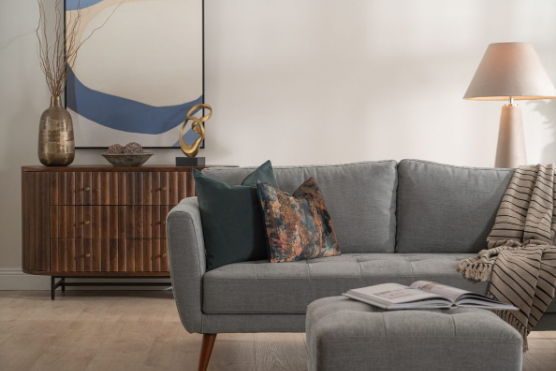
Mid-century modern furniture is the most frequently cited example of a design movement that has demonstrated undeniable longevity. Emerging in the 1940s through 1960s and experiencing continuous cultural prominence ever since, mid century modern sofas and seating designs remain among the best-selling furniture categories in contemporary retail. Their characteristic tapered legs, low profiles, clean upholstery lines, and complementary relationship with natural wood make them visually compatible with virtually any modern interior. A movement that has remained relevant for more than 70 years has clearly demonstrated it is not a cyclical trend.
Shaker and Arts and Crafts Furniture
Shaker furniture design, developed by the Shaker religious communities in the 18th and 19th centuries, produces pieces characterized by absolute functional simplicity — no decoration beyond what the joinery and material character provide. Arts and Crafts furniture, emerging from the late 19th century reaction against industrial ornamentation, shares this honest approach to materials and construction. Both movements produce furniture that reads as timeless rather than period-specific because they prioritize quality and function over stylistic signature.
Traditional and Classic European Styles
Certain European design traditions — Georgian, Federal, French provincial, and Biedermeier among them — have maintained continuous presence in residential interiors across centuries. These styles share an attention to proportion, quality of wood selection and finishing, and restraint in decorative detail that prevents the datedness that more elaborate Victorian or Baroque pieces accumulate. Traditional furniture in quality wood with careful proportioning suits formal dining rooms, libraries, and living spaces where a sense of permanence and heritage is appropriate and valued.
Scandinavian Design and Its Enduring Influence
Scandinavian design traditions, formalized in the 20th century but rooted in centuries of craft culture, produce furniture that balances functionality with warmth in ways that neither pure modernism nor traditional styles fully achieve. Natural wood, simple forms, comfortable upholstery, and an emphasis on the user experience rather than visual drama characterize this approach.
Conclusion
Timeless furniture styles succeed because they solve the problems furniture must solve — comfort, function, and visual harmony — with enduring rather than fashionable answers. Investing in pieces from these traditions provides a foundation that remains relevant and satisfying through years of changing interiors and personal taste.